
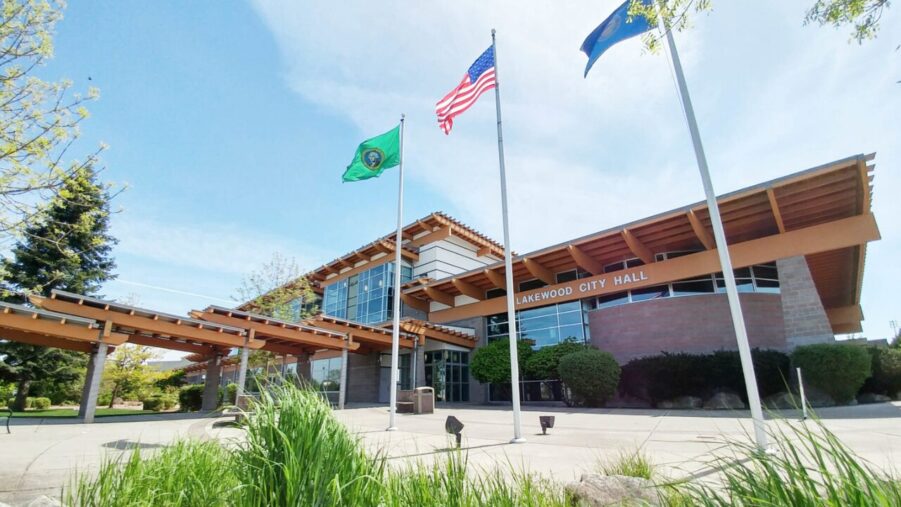
About This Project
What are the Cannabis Code Amendments?
Washington State legalized cannabis for adult use (age 21 or older) in 2012. While the Washington State Liquor and Cannabis Board (LCB) licenses cannabis businesses, state law allows cities to determine whether cannabis businesses may operate within their jurisdiction. State law also establishes minimum requirements for local cannabis regulations.
Lakewood currently does not allow cannabis businesses within city limits. The City is considering whether to change this policy and has developed draft amendments to the Lakewood Municipal Code (LMC) for consideration.
Project Timeline
The timeline below is tentative and subject to change. Please check this webpage for updates or contact Planning and Public Works staff for more information.
- July 15, 2026: Click here for Planning Commission introduction and public comment.
- July 29, 2026: Click here for Planning Commission study session draft amendments.
- August 5, 2026: Click here for Planning Commission public hearing on draft amendments & recommendation
- September 14, 2026: Click here for City Council study session materials
- September 21, 2026: Click here for City Council Public Hearing materials
- October 5, 2026: Click here for City Council action materials.
How to Participate
There are multiple ways to share your perspective with the City:
| Opportunity | Details | Action |
| Attend a public meeting and scheduled public hearings | Planning Commission and Council meetings are open to the public whether in person or virtual. Comments may also be submitted in writing. In addition, a public hearing will be scheduled on specific dates before both the Planning Commission and Council. | See calendar below for dates and agendas for upcoming public comment opportunities. Planning Commission – City of Lakewood Council Agenda Packets and Meeting Schedule – City of Lakewood |
| Submit written comments | Written comments accepted at any time during the project. Please note there will be public hearings during this process. Comments received during public hearings are part of the formal record. | Email [email protected] or Mail to City Hall at 6000 Main St SW, Lakewood WA 98499 |
| Request a Presentation or Meeting | Staff can present to your neighborhood, business group, faith community, or civic organization. | Email [email protected] to schedule |
Documents
Project documents will be posted here as they are completed. All documents are available in accessible PDF format.
- August 5, 2026 Click here to view Planning Commission Public Hearing materials on page 131.
- July 29, 2026 Click here to view Planning Commission Draft Code Amendment Study Session materials on page 122.
- July 15, 2026 Click here to view Planning Commission Introduction Study Session materials on page 192.
- September 14, 2026 Click here to view City Council study session materials on page 466.
- September 21, 2026 Click here to view City Council public hearing materials on page 206.
- October 5, 2026 Click here to view City Council ordinance materials on page 243.
Frequently Asked Questions
Lakewood currently does not allow cannabis businesses within city limits. State law also allows cities to ban or limit cannabis businesses entirely, regardless of state license status. This project will produce draft code amendments to consider this policy change. Until a code amendment is adopted by City Council and goes into effect, cannabis businesses may not establish operations in Lakewood.
Washington State’s Liquor and Cannabis Board (LCB) issues state cannabis licenses. Through state law, cities can require a separate permits and a local business license to operate within a city.
Washington State prohibits the Liquor and Cannabis Board from issuing a cannabis license for a premises located within 1,000 feet of the perimeter of certain sensitive uses, including elementary and secondary schools, playgrounds, recreation centers or facilities, child care centers, public parks, public transit centers, libraries, and game arcades not restricted to persons age 21 or older.
Cities may adopt local ordinances allowing reduced buffers for certain uses, but not below 100 feet. However, the 1,000-foot buffer may not be reduced for elementary schools, secondary schools, or public playgrounds. Any local buffer reduction must be adopted by local ordinance.
Cannabis remains regulated under the federal Controlled Substances Act and is not federally legalized for general adult use. However, in December 2025, a presidential executive order directed the U.S. Attorney General to expedite the ongoing federal process to reschedule marijuana from Schedule I to Schedule III.
In April 2026, the U.S. Department of Justice and Drug Enforcement Administration issued a limited order placing FDA-approved cannabis products and cannabis products regulated under qualifying state medical cannabis licenses into Schedule III. The federal government also initiated an expedited process to consider broader rescheduling of marijuana from Schedule I to Schedule III. That broader federal rescheduling process remains pending.
The State Environmental Policy Act (SEPA) requires local governments to review potential environmental impacts before taking certain actions, including amendments to development regulations. This is called a non-project SEPA review.
As part of the cannabis code amendment process, the City will prepare an environmental checklist and issue a SEPA threshold determination. The threshold determination will identify whether the proposed amendments are likely to have probable significant adverse environmental impacts.
Once issued, the SEPA determination and related materials will be made available for public review, and a public comment period will be provided as part of the notice.
Contact
Angie Silva
Planning & Public Works Assistant Director
[email protected]
(253) 983-7839
6000 Main Street SW, Lakewood, WA 98499